 Seamlessprotocol
 ILM v1 Bonus Proposal and Eligibility Rules
Updated -
Seamlessprotocol’s July 2025 migration-bonus proposal targeted holders of the legacy 1.5x and 3x ETH Long ILMs. The terms combined historical ILM ownership, a separate Morpho vault snapshot, a timely claim, and payment to the original wallet. Meeting those conditions didn’t establish an individual payout.
Bottom line: A later vault deposit couldn’t replace the proposed bonus’s required participation at the July 3, 2025 snapshot.
The ETH Long Holding Requirement
1.5x and 3x ETH Long ILM positions held on March 28, 2025, formed the proposal’s first eligibility boundary. Either strategy could satisfy that holding condition. The date referred to the wind-down announcement, so ownership at another point didn’t necessarily establish the required historical position.
A later Leverage Token position couldn’t substitute for the specified March holding. Leverage Tokens belonged to the project’s subsequent product development, while the bonus addressed participation in the older platform.
Which Morpho Vault Deposits Counted?
Deposits in any Seamless Vault on Morpho met the proposed vault-participation condition if they existed at the July 3, 2025 snapshot. The scope covered the Seamless vault family, rather than every vault using Morpho infrastructure.
The proposal identified the snapshot as Base block 32357648. A later balance couldn’t replace a deposit missing at that checkpoint, and the March 28 ILM holding date served a different condition.
How Long Was the Proposed Claim Window?
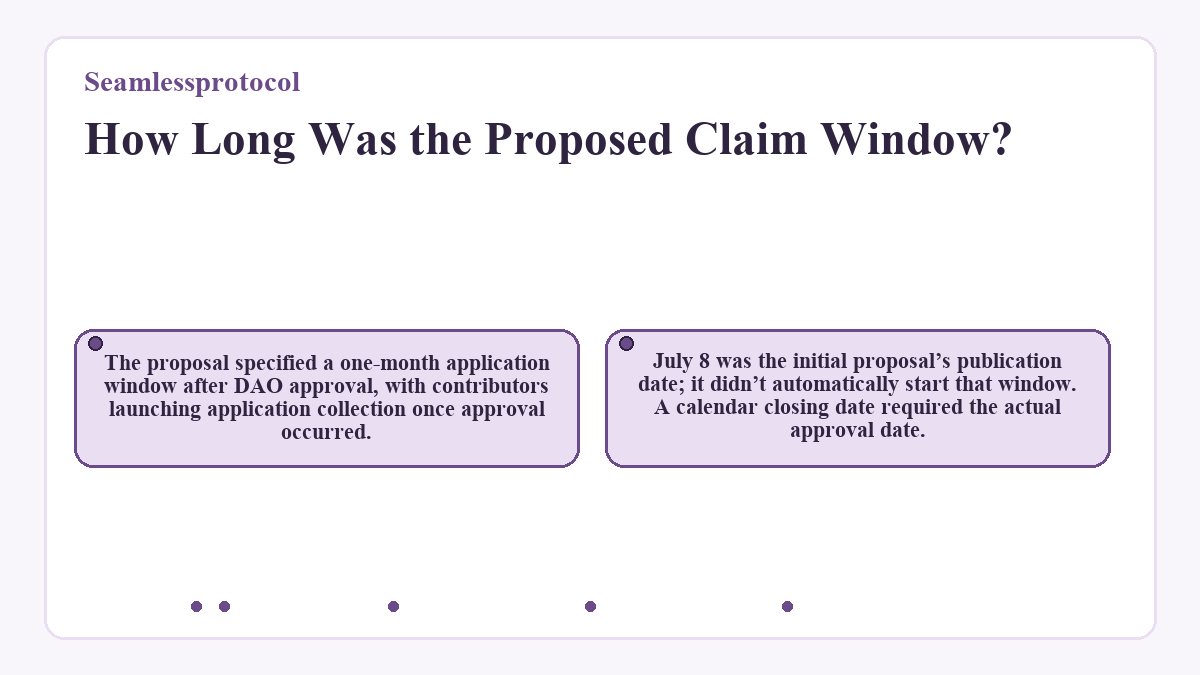
The proposal specified a one-month application window after DAO approval, with contributors launching application collection once approval occurred. July 8 was the initial proposal’s publication date; it didn’t automatically start that window. A calendar closing date required the actual approval date.
The Original Wallet as Payment Recipient
The wallet that held the eligible ILM position was the proposed recipient of the reward. The wallet-identity lock restricted where contributors could send an approved allocation. Naming another receiving wallet wouldn’t satisfy that restriction, even if an applicant considered the addresses part of the same personal holdings.
The proposal described the restriction as protection against fraud and identity theft. The terms didn’t include a substitute-recipient process.
Application Checks and Distribution Governance
Core contributors would launch application collection after DAO approval. The process called for a claim through a Google Form during the application window.
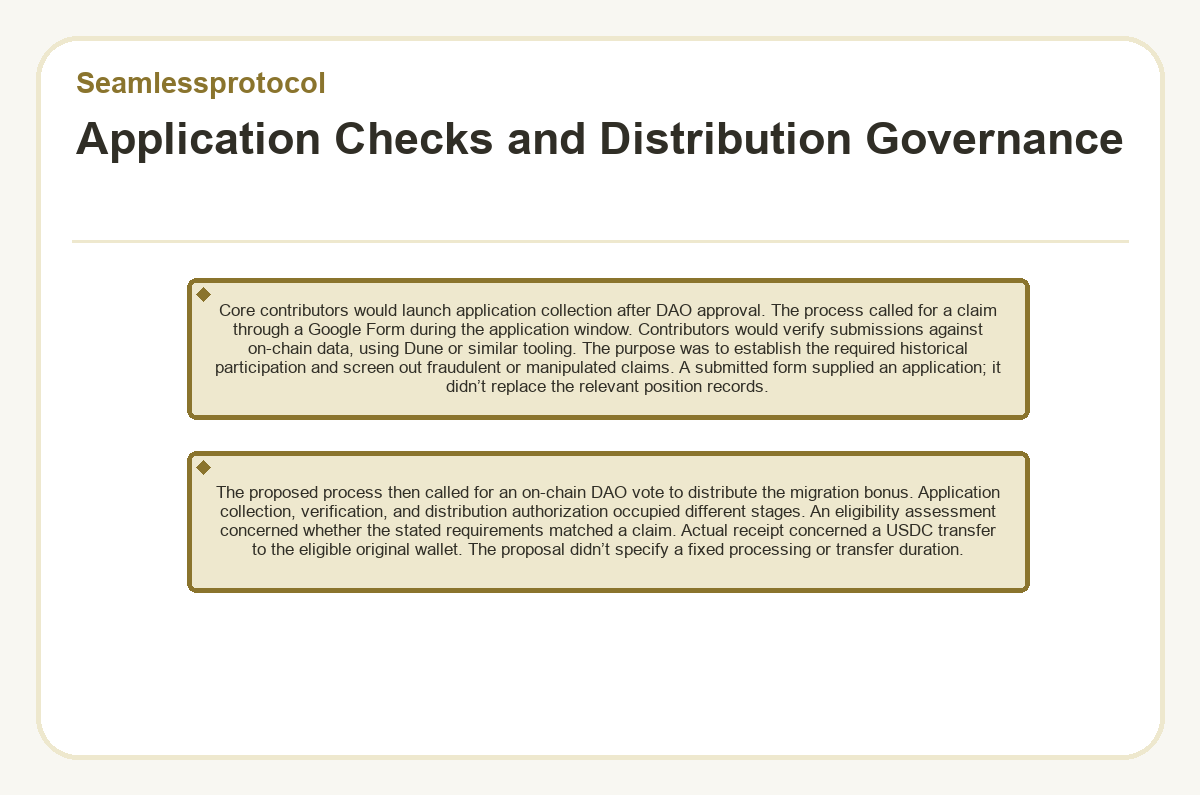
Contributors would verify submissions against on-chain data, using Dune or similar tooling. The purpose was to establish the required historical participation and screen out fraudulent or manipulated claims. A submitted form supplied an application; it didn’t replace the relevant position records.
The proposed process then called for an on-chain DAO vote to distribute the migration bonus. Application collection, verification, and distribution authorization occupied different stages.
An eligibility assessment concerned whether the stated requirements matched a claim. Actual receipt concerned a USDC transfer to the eligible original wallet. The proposal didn’t specify a fixed processing or transfer duration.
The Proposed USDC Budget Ceiling
The July 2025 proposal set a budget ceiling of $20,000 USD, payable in USDC. It identified the Reserve Factor wallet as the funding source. The ceiling applied to the overall migration-bonus program, rather than an amount available to each applicant.
Pro-Rata Allocation and Unclaimed Amounts
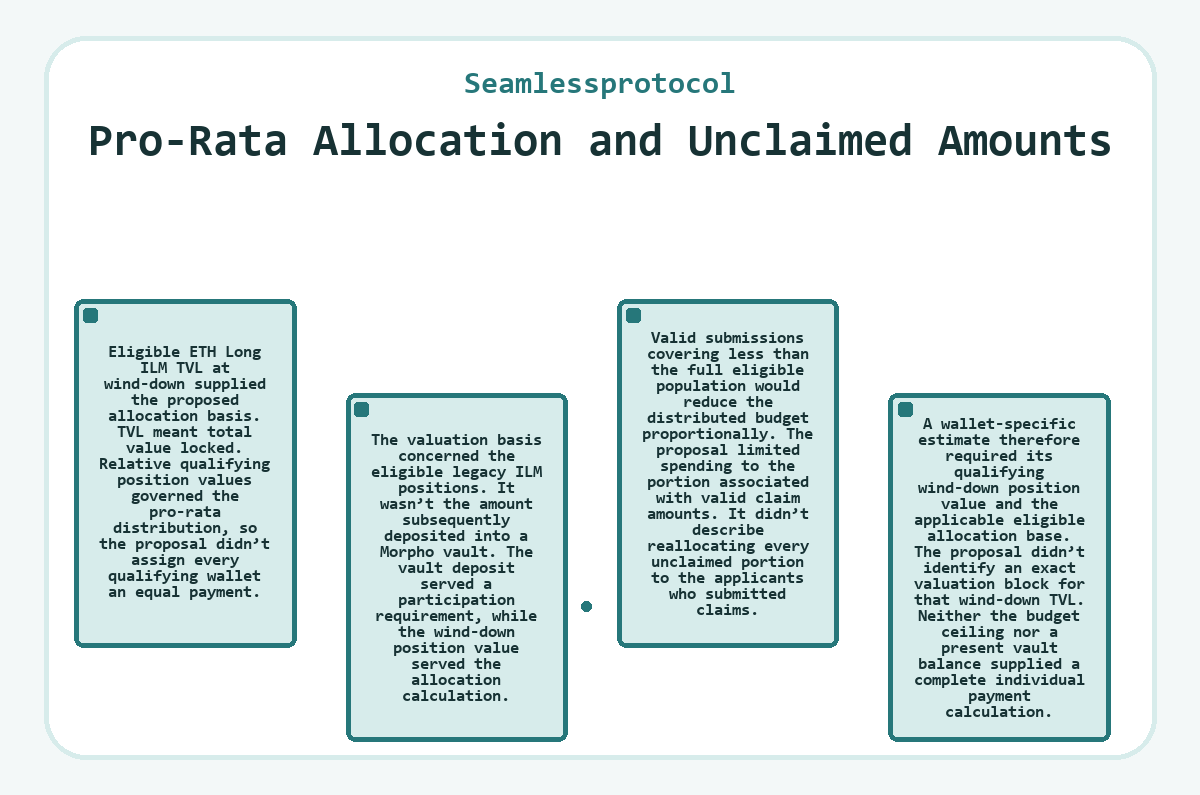
Eligible ETH Long ILM TVL at wind-down supplied the proposed allocation basis. TVL meant total value locked. Relative qualifying position values governed the pro-rata distribution, so the proposal didn’t assign every qualifying wallet an equal payment.
The valuation basis concerned the eligible legacy ILM positions. It wasn’t the amount subsequently deposited into a Morpho vault. The vault deposit served a participation requirement, while the wind-down position value served the allocation calculation.
Valid submissions covering less than the full eligible population would reduce the distributed budget proportionally. The proposal limited spending to the portion associated with valid claim amounts. It didn’t describe reallocating every unclaimed portion to the applicants who submitted claims.
A wallet-specific estimate therefore required its qualifying wind-down position value and the applicable eligible allocation base. The proposal didn’t identify an exact valuation block for that wind-down TVL. Neither the budget ceiling nor a present vault balance supplied a complete individual payment calculation.
A Later Deposit and an Unmet Snapshot Condition
Consider a hypothetical holder who owned an eligible 3x ETH Long ILM on March 28, 2025. Their first Seamless Vault deposit occurred after the July 3 snapshot. They assumed that this later vault participation completed eligibility and wanted to assess the claim before changing any holdings.
Checking participation at Base block 32357648 reveals the missing prerequisite in this hypothetical case: no qualifying vault deposit existed at the required checkpoint. The proposed conditions would exclude the claim on those facts. Making another deposit wouldn’t change the historical record.
A repeat assessment could change only if corrected records established qualifying participation at the snapshot. Otherwise, the unmet condition would remain. Even with corrected records, the application would still need to satisfy the approval-relative window and original-wallet payment rule.
The Legacy Wind-Down Behind the Dates
The legacy platform’s structured sunset began on March 28, 2025, during the transition away from its Aave-based architecture toward Morpho vaults. On April 11, leverage on all legacy ILM vaults went to zero, unwinding the remaining active positions.
The July 8 proposal introduced the bonus terms, and a July 18 version carried the GP-12 label. Publication of either version didn’t itself establish approval or a completed distribution.
Directional Loss and the Bonus’s Limits
The proposal addressed ETH Long holders who may have closed at a net loss or lost the opportunity to retain exposure through a rebound. It didn’t establish the realized loss of every holder or make a later ETH recovery part of the payout calculation.
The reward framework used eligible position TVL and a capped USDC budget. It didn’t promise reimbursement of each wallet’s trading losses or a payment equal to foregone gains. Under the proposed terms, a loss figure alone couldn’t replace a missing holding, vault, or application condition.
Frequently asked questions about Seamlessprotocol
Did the ILM v1 Bonus Terms Require SEAM Ownership?
The ILM v1 bonus proposal’s listed eligibility conditions didn’t require a SEAM balance. They concerned eligible ETH Long ILM ownership, Seamless Vault participation at the snapshot, a timely application, and the original payment wallet. SEAM holdings alone didn’t establish participation in the legacy strategies that the proposed bonus targeted.
Was There a Minimum Qualifying Morpho Deposit Amount?
The proposal didn’t specify a minimum deposit amount in its bonus eligibility conditions. It required participation in a Seamless Vault on Morpho at the stated snapshot. That omission didn’t establish the deposit limits of any particular vault; program eligibility and the vault’s own operating rules were separate questions.
Did Applicants Have to Remain in Morpho Vaults Continuously?
The written conditions specified vault participation at the July 3, 2025 snapshot, without adding a continuous-holding requirement. They separately tested ILM ownership on March 28.
Could wstETH/ETH or cbBTC ILM Holdings Meet the Bonus’s ETH Long Requirement?
Those ILM holdings didn’t satisfy the specific ETH Long holding requirement in the proposal. The eligible strategies were the 1.5x and 3x ETH Long ILMs. Other legacy ILMs appeared in the wind-down discussion, but that background didn’t add them to the proposed eligibility criteria.
Would the Proposed Reward Arrive as Leverage Tokens?
The proposed reward asset was USDC.